Facial Architecture: How to Hide Patchy Areas and Build the Perfect Beard

Many men give up on a beard right at the start, quitting after the first month. The reasons are familiar: “it doesn’t grow here,” “there’s a bald patch,” “it looks patchy.” But the truth is that a great beard is not just about genetic luck — it’s about proper engineering and care.
To understand how to make a beard work for you, we turned to Illia — Scissor Hands ambassador and barber at the Comfort-Zone barbershop. With 9 years of experience, he works with beards of any complexity, turning “problem areas” into visual advantages.
The Square Is the Foundation of Masculine Character
In male aesthetics, the main geometric shape is the square. It emphasizes masculinity by highlighting the jawline, accentuating the cheekbones and frontal bone structure. Rounded shapes are used rarely and only when anatomy requires it.
Each beard is adapted individually — to the jaw, bone structure, and facial symmetry.
Patchy Areas: Genetics, Stress, or Alopecia
In most cases, patchy areas in the beard are genetic.
However, in recent years another factor has emerged — stress.
Alopecia can appear suddenly: round gaps that are difficult or almost impossible to cover, especially with a medium-length beard.
As Illia notes, age also plays an important role: minoxidil or oils can show results mainly between the ages of 16–18. After 25, relying solely on cosmetics is not worth it — this is already the territory of medicine and trichology.
Can Patchy Areas in the Beard Be Covered?
Yes — but not always, Illia says. The key point is where exactly the gap is located. If the highest point on the cheek and the lower neck area have good density, the gaps can be covered by length.
Illia gives an example of a client who avoided wearing a beard for years due to a large number of gaps. Gradual growth and the right shape produced results — today it’s a long, massive beard that the client is completely satisfied with.
The “Strand Skipping” Technique: How to Hide Patchy Areas
If you have dense hair at the highest point of the cheek and along the neckline, any gaps in the middle can be covered with length.
For this, Illia uses the “strand skipping” technique: slightly more length is left over the patchy area. Layer by layer, the hair overlaps, creating an effect of accumulated mass. Visually, the gap disappears, while the beard lies evenly, without unnecessary “bumps.”
Coarse but Not Dense: Special Beards and Mustaches
Sometimes a beard or mustache is not dense, but very coarse. This is a real gift for styling. Even if a mustache consists of only 20–30 hairs, thanks to its coarseness it can hold a strong curl. The main thing here is proper fixation.
Scissor Hands Grooming Toolkit
Illia works exclusively with Scissor Hands cosmetics, as each product has a clearly defined function: for the skin, for growth, or for reinforced fixation.
-
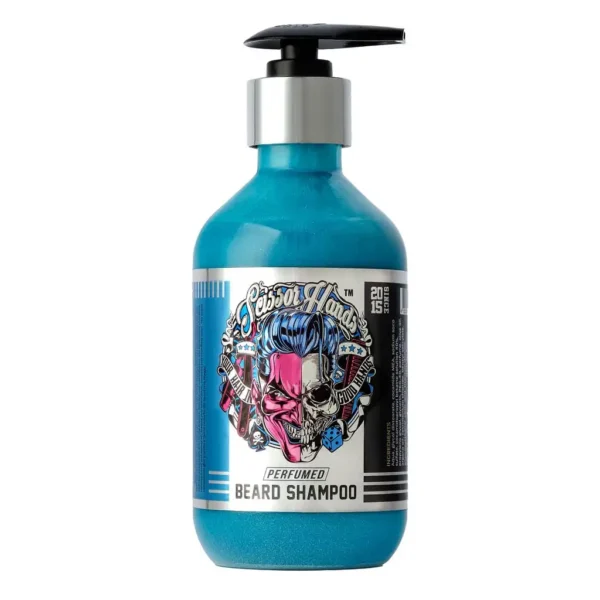
BEARD SHAMPOO
$29,30
Softening: If your beard is coarse or difficult to comb, a conditioner is essential.


For fixation and mass:
Rider and Tomahawk balms. They don’t just style — they “thicken” the beard while maintaining its shape.


For short beards:
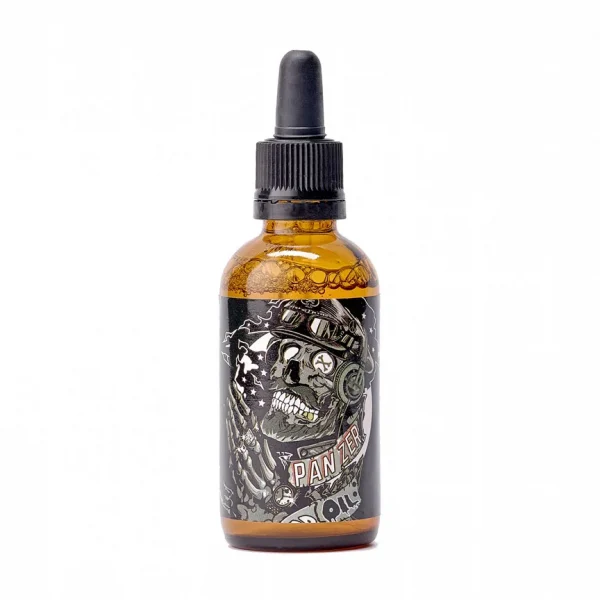
Voodoo, Panzer, or Vigor oils. Oil is a product for softening coarse hair and moisturizing the skin.


For mustaches: Scissor Hands wax — holds shape perfectly throughout the day.
-
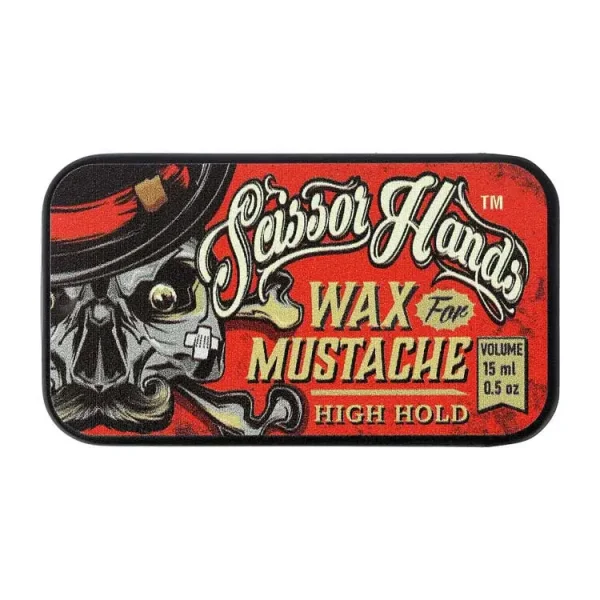
Mustache wax
$23,24
Professional Ritual vs. Home Mistakes
The biggest mistake, according to Illia, is self-cutting. When a man trims the lines himself, he unintentionally stretches the skin, disrupts the angle, and makes the shape rounded. This destroys the entire masculine silhouette.
How it’s done in a barbershop:
1. Preparation: Steaming and shampooing. We work only with clean hair.
2. Shaping: Creating clear lines on wet hair and final refinement on dry.
3. Protection: Cold compress to close the pores.
4. Styling: Blow-drying, brushing, and applying a fixing product.
The Master’s Main Advice
Don’t be afraid to try. After one month (when the length reaches about 1.5 cm), you can already understand your beard’s potential: growth direction, density, and whorls.
Author of the article:
Oleksandra Matafonova
Illia Fedorenko
www.instagram.com/comfort_zone_barbershop


ПРОДОЛЖИТЬ ЧТЕНИЕ
ПРОДОВЖИТИ ЧИТАННЯ
CONTINUE READING