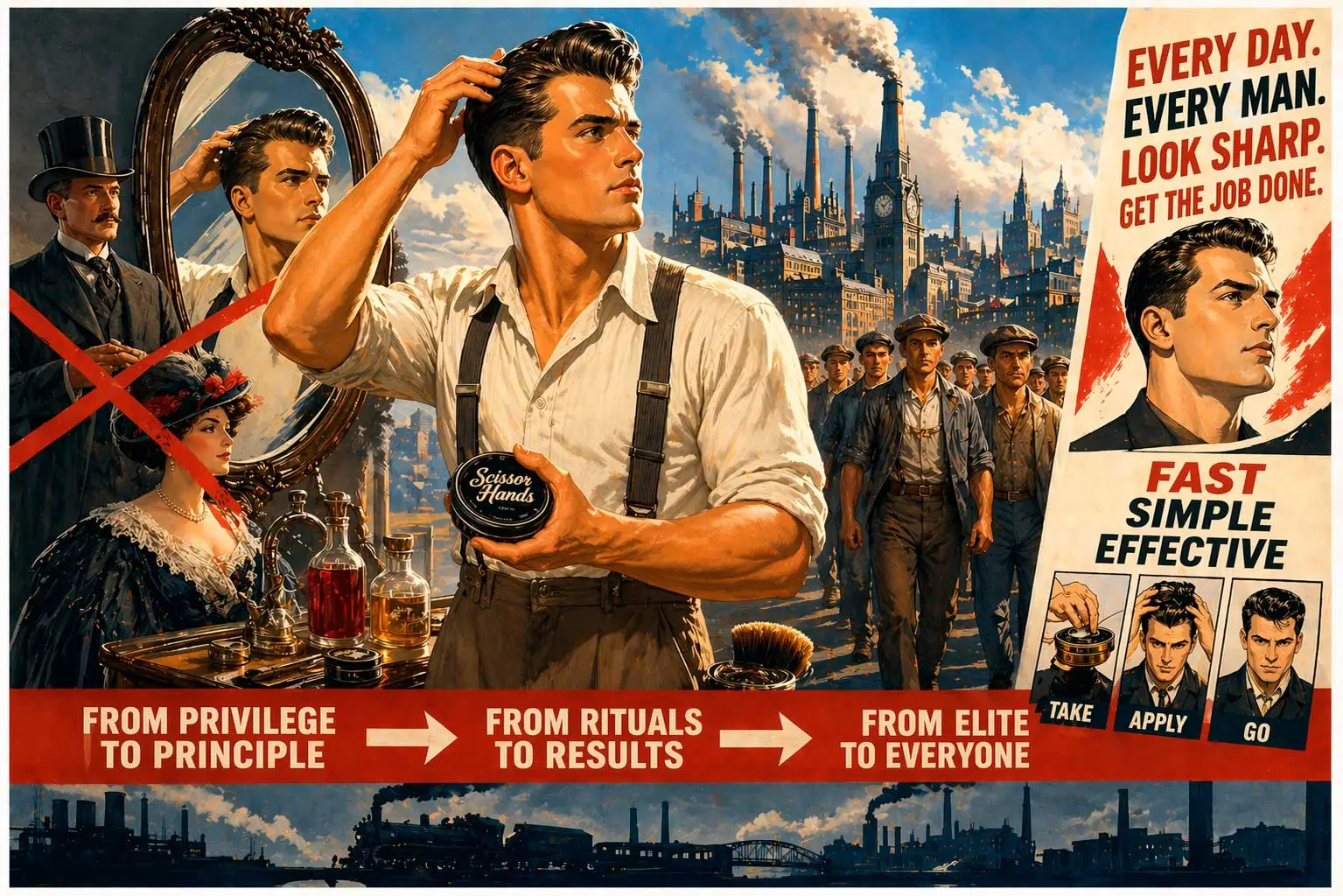
“The Evolution of Men’s Styling: From Oil Brilliantines to Matte Pastes” PART 1
Style didn’t appear yesterday. It has been forming for centuries — alongside society, culture, and a man’s perception of himself. How a man styles his hair today is far more than just a habit. It is the result of a long evolution.
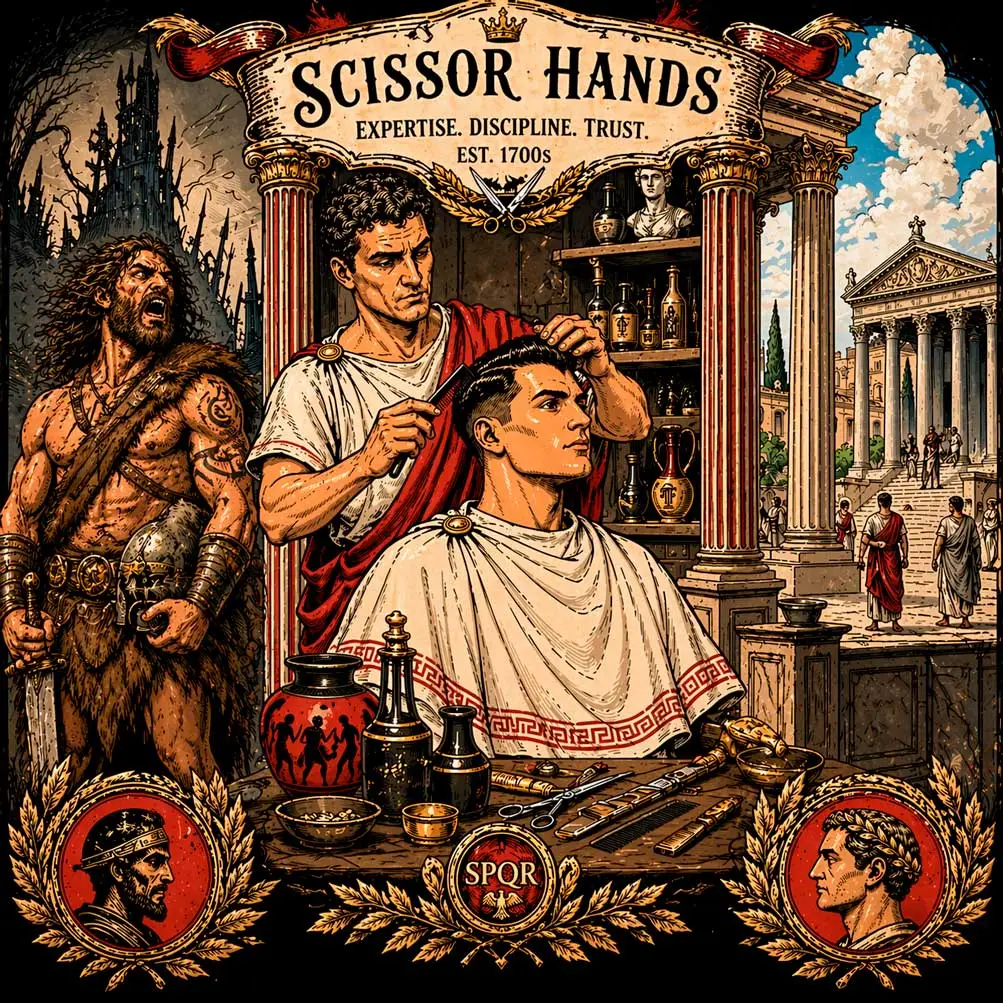
1. Ancient Rome — the beginning of men’s grooming as a system.
1.1 Rome is not about style, but about control.
In Rome, a man’s appearance was never about beauty; it was about status, discipline, and belonging to society. A clean, well-groomed man = a civilized person. Ungroomed = a barbarian.
1.2 Hair was never left “as is”.
Romans did not leave their hair uncontrolled. Main styles: Short hair — the standard for citizens, providing practicality and order. Sharp shapes, neat lines, absolutely no chaos.

1.3 Barbershops already existed.
They were called: tonstrinae. Purpose: Men visited them for haircuts, beard care, and nail trimming. Social role: Barbershops were places to socialize, discuss the latest news, rumors, politics, and philosophy.
1.4 What was used for “styling”.
Here is where the fun begins. Romans used oils: olive oil (the base), almond oil, sometimes with additives. All of this provided shine, manageability, and a “put-together” look.

1.5 Waxes (in their infancy).
There is evidence that beeswax was used and mixed with oils. This is very close to the first “brilliantines”. Note: wax was also used in Greece, but its specific purpose for hair hold started exactly in Rome.
1.6 What styling looked like.
There were no modern blowouts, but there were firm principles: hair smoothed down, visible shine, no sticking-out chaos, the shape is completely controlled. Essentially, it was an early slick style.

2. Early Europe and the era of gloss.
2.1 Style becomes a statement.
If in Rome a man merely controlled his appearance, in Europe he starts showing it off. Hair becomes a vital part of the image, rather than just a sign of neatness. Attention to detail, shape, and effect emerges.

2.2 Complex shapes appear.
Unlike Rome: hair gets longer, actual styling appears, volume is added, curls are formed. And this is much more than just control — it is working with shape.

2.3 Shine becomes the norm.
The use of oils, waxes, and greasy formulas intensifies. BUT: now the goal is not only control but a visual effect: shine, smoothness, an “expensive” look. Barbers back then did not just cut hair; they also provided shaving, bloodletting, and minor medical procedures. Hence the origin of the symbol: 🔴⚪🔵 barber pole (red, white, and blue pole).

2.4 Fragrance enters the game.
Yes, it is in Europe that the aromatization of products and the mixing of oils with perfumery intensify. A stage where styling + fragrance = a single product. Styling stops being exclusively visual. It starts working on sensation as well. Smell becomes a part of the image.
2.5 The ancestor of brilliantine appears.
It is here that dense, greasy formulas are formed, which will later become the basis of classic brilliantines.

🖋 Zinenko Nazar Eduardovich


ПРОДОЛЖИТЬ ЧТЕНИЕ
ПРОДОВЖИТИ ЧИТАННЯ
CONTINUE READING